

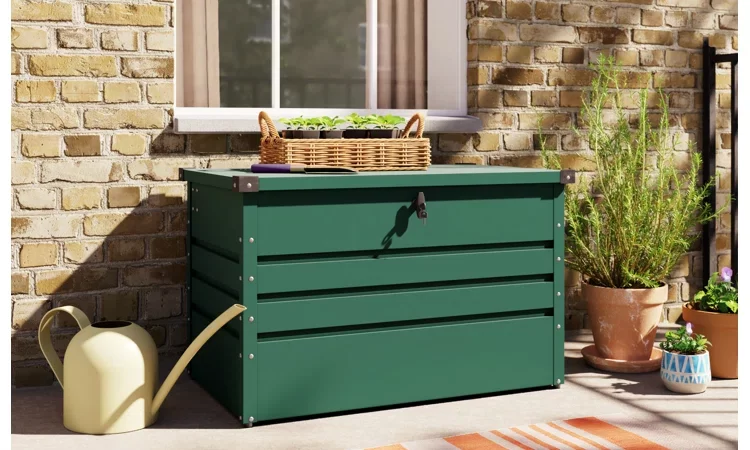
Deck boxes are a practical and stylish way to store outdoor cushions, garden tools, and seasonal décor—but not all are made to handle Canada’s harsh climate. Between freezing winters, rainy springs, and UV-intense summers, choosing the right material can mean the
difference between a long-lasting investment and a short-lived storage solution.
Whether you’re in coastal British Columbia, snowy Ontario, or the humid Maritimes, knowing how resin, metal, and wood deck boxes perform under Canadian weather helps you make the most informed choice.
Why Material Matters in Canada
In Canada, outdoor furniture is exposed to extreme temperatures and moisture fluctuations. Materials expand and contract, finishes can fade, and water infiltration leads to cracking, swelling, or rust. The best deck box material balances durability, weather resistance, maintenance, and appearance. Let’s break down how each major type—resin, metal, and wood—stacks up across these categories.
Resin Deck Boxes: Lightweight and Weatherproof
Resin deck boxes, made from high-density polyethylene (HDPE) or polypropylene, are a top pick for homeowners who need hassle-free storage year-round. They handle snow, rain, and sunlight well without cracking or warping, even as temperatures swing from -30°C to +30°C.
Pros:
- Excellent weather resistance. Resin won’t rust, rot, or absorb water, making it ideal for wet or snowy regions.
- UV protection. Many models include UV inhibitors that prevent fading in direct sunlight.
- Low maintenance. A quick rinse with soapy water keeps it looking new—no sanding, sealing, or repainting needed.
- Lightweight and affordable. Easy to move around decks or patios, and often more budget-friendly than wood or metal alternatives.
Cons:
- Less structural strength. Though durable, resin can flex under heavy weights over time.
- Not eco-friendly. Unless made from recycled materials, it’s not biodegradable.
Best for: Busy homeowners or renters seeking a functional, weatherproof, and stylish storage box that doesn’t require upkeep.
If you’re leaning toward resin, consider this selection of deck boxes from Keter, a trusted brand known for designs that resist cracking, fading, and rust through every Canadian season.
Metal Deck Boxes: Strong but Sensitive to Moisture
Metal deck boxes—typically steel, aluminum, or galvanized iron—offer unmatched strength and security. They’re a good fit if you store tools or equipment that require a sturdier enclosure. However, their performance depends heavily on the coating and regional climate.
Pros:
- High durability and security. Metal walls protect against pests and prying eyes.
- Sleek, modern look. Ideal for contemporary patios or minimalist spaces.
- Minimal sagging or bending. They maintain their shape better under heavy loads, such as firewood or garden soil.
Cons:
- Prone to rust and corrosion. In coastal or high-humidity areas, moisture can degrade finishes over time.
- Heat and cold transfer. Metal absorbs temperature, which can make surfaces hot in summer or frosty in winter.
- Needs periodic treatment. Paint or powder coating must be maintained to prevent rust spots.
Best for: Secure, heavy-duty storage in dry regions or under-covered decks where exposure to precipitation is limited.
Wood Deck Boxes: Timeless Beauty with Care Requirements
Wood deck boxes bring warmth and natural charm to outdoor living spaces. They blend seamlessly with decks, pergolas, and fences—but require more maintenance to survive the Canadian climate.
Pros:
- Classic aesthetic. Wood fits both rustic cottages and modern outdoor lounges.
- Sturdy and customizable. You can paint, stain, or seal it to match your deck’s colour scheme.
- Naturally strong. Hardwoods like cedar and teak resist decay and insects better than softwoods.
Cons:
- Regular maintenance required. To prevent cracking, warping, or rot, you’ll need to seal or refinish it annually.
- Heavy and less portable. Once placed, they’re not easy to move around.
- Higher cost. Quality hardwoods come with a premium price tag.
Best for: Homeowners who value aesthetics and craftsmanship and don’t mind seasonal upkeep.
Comparing Resin, Metal, and Wood Deck Boxes
| Feature | Resin | Metal | Wood |
| Weather Resistance | Excellent | Moderate | Moderate, if sealed |
| Maintenance Needs | Low | Medium | High |
| Weight | Light | Heavy | Heavy |
| Aesthetic Appeal | Modern/plastic look | Industrial sleek | Natural and warm |
| Durability in Snow/Rain | Excellent | Good (with coating) | Fair to Good (with sealant) |
| Cost | Low to moderate | Moderate | High |
This table highlights that resin offers the best combination of durability and convenience for fluctuating Canadian conditions, while wood adds visual warmth, and metal provides industrial-grade sturdiness.
Tips for Extending Your Deck Box’s Lifespan
Regardless of material, a few small steps can help prolong your deck box’s life:
- Keep it slightly elevated. Use rubber feet, pavers, or a wooden platform to lift it off the ground and prevent pooling water.
- Use a weatherproof cover, especially during the winter months or heavy rain.
- Clean seasonally. Remove dust, leaves, and debris that can trap moisture.
- Store cushions indoors for winter. Even if your box is waterproof, it helps keep fabrics fresh.
When facing Canada’s unpredictable weather, the best deck box material depends on your priorities.
- Choose resin for all-season resilience and minimal care.
- Go with metal for industrial-strength, secure storage.
- Pick wood if beauty and craftsmanship matter most.
If ease, weather resistance, and affordability top your list, resin tends to win for most homeowners across the country. With proper placement and occasional cleaning, a quality resin deck box can stay looking great for years—no sanding or rust-proofing required.