
Toilet leakage sits there in your bathroom, dripping away, often for months before you notice anything amiss. I have seen toilets in Singapore flats losing forty litres daily, the water simply vanishing into the drainage system whilst the meter spins and the bills climb. The homeowner blames the teenagers’ long showers or perhaps the maid’s cleaning habits, never suspecting that the porcelain fixture itself betrays them silently, hour after hour.
The Nature of Concealment
Walk into any HDB corridor at three in the morning and listen carefully. You might hear it if you know what to listen for: that faint hiss of water moving where it should not move, the whisper of mechanical failure. Toilet leakage possess remarkable stealth. Unlike a dripping tap that announces itself with rhythmic plinking, or a burst pipe that floods the floor spectacularly, the leaking toilet operates in shadows. Water escapes at the molecular level through degraded seals, through hairline cracks invisible to casual inspection, through valve seats worn smooth by years of use.
In Singapore, where the Public Utilities Board monitors consumption patterns across millions of households, the data reveals curious patterns. Monthly water bills creep upward by ten percent, then fifteen, then twenty. The increase feels gradual enough to dismiss, attributed to lifestyle changes rather than infrastructure failure.
The Systematic Inspection Protocol
Detection requires method. I recommend beginning at the cistern, that elevated reservoir where water awaits its purposeful flush. Remove the lid carefully (porcelain chips easily) and observe the water level. It should sit approximately one inch below the overflow tube. If water trickles steadily into this tube, the fill valve requires adjustment or replacement.
Now conduct the dye test, a technique so simple it feels almost primitive, yet remains remarkably effective:
- Add several drops of food colouring into the cistern water
- Wait thirty minutes without flushing
- Check the bowl for colour migration
- Any tinting indicates flapper seal failure
According to Singapore’s water conservation guidelines, “A leaking toilet flapper can waste up to 200 litres of water per day, making it one of the most significant sources of household water loss.”
The Flapper Examination
The flapper deserves particular attention. This rubber seal, roughly the size of your palm, bears responsibility for holding back the entire cistern contents between flushes. Lift it gently from its seated position. Run your fingers along the sealing surface. You are feeling for irregularities: mineral deposits that prevent proper closure, rubber that has hardened and cracked, edges worn concave by water flow. The texture should feel uniformly soft and pliable, like new rubber. If it feels stiff, if you see cracks radiating from the chain attachment point, if algae has colonised the surface, replacement becomes necessary.
Base Inspection Procedures
Now move your attention downward to where porcelain meets floor. Leaking toilets often announce their presence here, though moisture at the base presents diagnostic challenges in Singapore’s climate. Is that water from a leak or simply condensation from the temperature differential between cool cistern water and warm ambient air?
The tactile test provides answers:
- Place paper towels around the entire toilet base
- Leave them for several hours
- Examine for water absorption patterns
- Condensation appears uniformly distributed; leakage concentrates at specific points
Actual toilet water leaks at the base typically originate from wax ring failure, the seal connecting toilet to drain pipe. This represents serious concern because you are now dealing with wastewater escape rather than clean water loss.
Supply Line Assessment
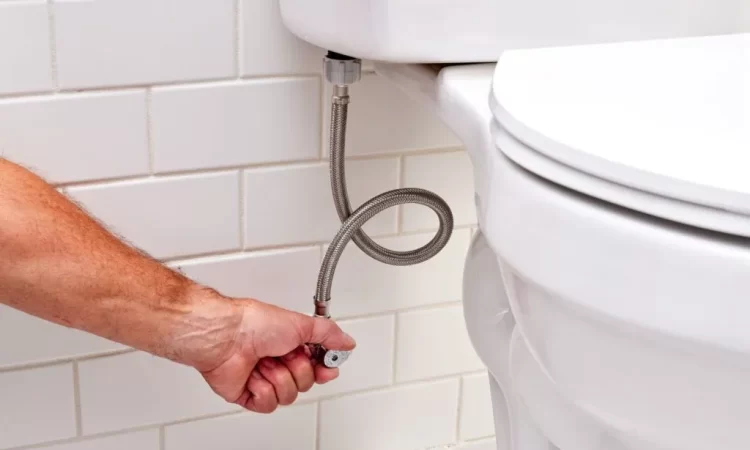
The flexible supply line running from wall to toilet tank deserves scrutiny. These braided metal or plastic lines contain internal rubber tubing that degrades over time. Check both connection points: where the line meets the shut-off valve at the wall, and where it connects to the toilet tank inlet. Feel for moisture. Look for corrosion on metal fittings, or white mineral deposits indicating slow seepage.
The Silent Refill Phenomenon
Perhaps the most insidious form of WC leakage involves the phantom refill. You sit in your living room, the toilet unused for hours, and suddenly hear water running. It continues for perhaps thirty seconds, then stops. The fill valve has activated to replace water that escaped gradually through an imperfect seal. This cycle might repeat every twenty minutes, every hour, accumulating substantial waste over days and weeks.
Cistern Components Verification
Inside the cistern, multiple components interact in orchestrated sequence. The fill valve assembly, the float mechanism, the flush valve, the overflow tube. Each represents a potential failure point. I have found that leaking toilet cisterns most commonly fail at the flush valve gasket, the large rubber seal at the cistern bottom where water exits during flushing. This component bears constant pressure from standing water weight and eventually compresses permanently, creating gaps.
The Acoustic Method
Here is a technique professionals use: in a quiet house, place your ear against the cistern’s exterior porcelain. You may hear things imperceptible to the casual observer. A faint hissing indicates water movement through a compromised seal. A periodic gurgling suggests air entering the system where water should remain static. These acoustic signatures provide diagnostic information before visual evidence emerges.
Environmental Context
Singapore’s water situation lends urgency to these investigations. The nation imports roughly fifty percent of its water supply, making conservation not merely economical but strategically important. A single household’s toilet leakage contributes to broader systemic stress on resources.
Identifying and addressing hidden water problems requires patience, systematic methodology, and willingness to investigate thoroughly. The checklist approach transforms what seems mysterious into manageable tasks, each building upon previous observations until the complete picture emerges and Toilet leakage reveals itself unmistakably.