
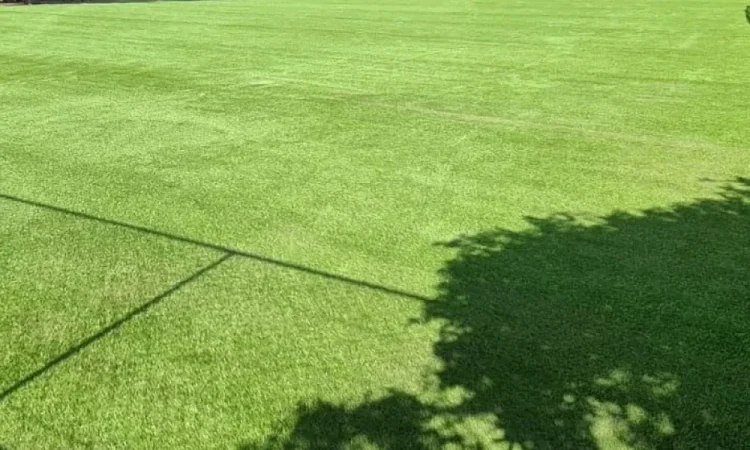
Pile height refers to the length of the synthetic grass fibres measured from the backing to the tip. It plays an important role in how artificial turf looks, feels and performs.
Longer fibres may appear soft and luxurious, while shorter fibres can provide a neat, durable and easy-to-maintain surface. The best choice depends on where the grass will be installed and how the area will be used.
Longer does not always mean better
It is easy to assume that the longest synthetic grass will look the most natural. However, very long fibres may flatten more easily, particularly in high-traffic areas.
A dense product with a moderate pile height can often look fuller than a taller product with fewer fibres. Density, fibre shape, colour variation and yarn quality should therefore be considered alongside pile height.
A balanced product is usually more important than choosing the tallest option available.
Creating a natural residential lawn
For many residential gardens, a medium pile height offers a good combination of softness, appearance and practicality. It can recreate the look of a healthy lawn without appearing overly long or difficult to maintain.
This type of synthetic grass is often suitable for backyards, front gardens and general landscaping. The fibres have enough length to feel comfortable underfoot while remaining manageable with regular brushing.
The surrounding landscape should also influence the selection. A manicured garden may suit a shorter, more uniform surface, while a relaxed backyard may benefit from slightly longer and more varied fibres.
Choosing grass for busy areas
Shorter pile heights are often preferred for high-use areas because the fibres are less likely to flatten. This can make them suitable for pathways, communal spaces, balconies and sections where children or pets regularly play.
The shorter surface can also be easier to clean. Leaves, dirt and pet hair are less likely to settle deeply between the fibres.
Durability still depends on the overall construction of the product. A short pile does not guarantee better performance unless the turf also has strong fibres, suitable density and quality backing.
Matching the product to pets and children
Families with pets may prefer a shorter or medium pile height that is comfortable but easy to rinse and maintain. Waste can be removed more easily, and the fibres are less likely to trap loose debris.
For children’s play spaces, comfort and impact requirements may be more important than pile height alone. The turf may need to be installed with a suitable shock-absorbing layer, depending on the equipment and fall height involved.
A professional supplier can help match the surface to the intended use rather than relying on appearance alone.
Looking beyond the sample
Small samples can make it difficult to judge how synthetic grass will look across a full backyard. Whenever possible, view a larger installation in natural light.
Walk on the grass, brush the fibres in different directions and consider how it looks beside existing plants, paving and building materials. The best pile height should suit the scale and style of the property.
Finding the right balance
There is no single pile height that is best for every synthetic grass project. A residential lawn, pet area, commercial courtyard and playground will all have different requirements.
The strongest choice balances appearance, comfort, traffic levels and maintenance. By considering the entire product rather than focusing only on fibre length, homeowners can select synthetic grass that continues to look attractive and perform well for years.