
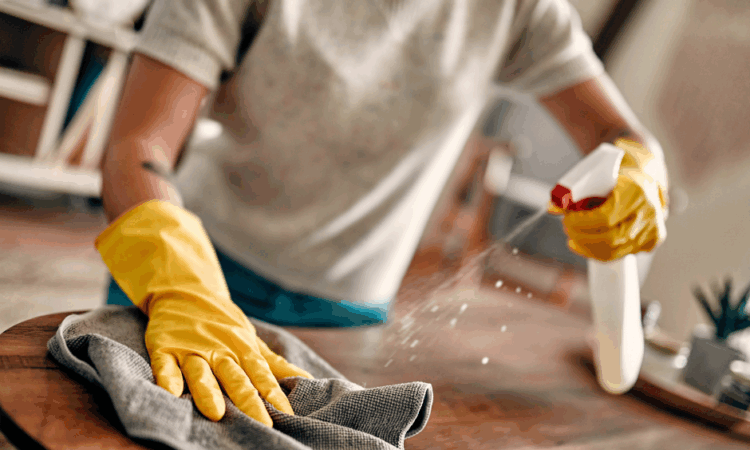
Imagine you’re scrubbing the bathroom, your eyes are watering, your throat is burning, and you’re pretty sure you’ve created a toxic cloud that could take out a small village.
You glance at the bottle, and there are three different warning labels and a skull icon. Suddenly, you start to feel like you should’ve worn a mask and a hazmat suit. If your cleaner feels like it belongs in a lab, it’s time to rethink your approach.
This guide will show you how to swap harsh cleaners for natural ingredients that work and won’t knock you out in the process.
Gather These Five Ingredients
These five basics handle almost every cleaning task, so there’s no need for a cupboard full of specialised sprays.
Start with white vinegar, your everyday cleaner. It dissolves soap scum, cuts through grease, and makes glass shine; the cheap supermarket bottle works perfectly.
Next up is baking soda. Think of it as your gentle scrubber. It lifts stains, absorbs smells, and won’t scratch surfaces. Use it dry for carpets, or mix with a little water to form a paste.
Then bring in liquid soap. When you need something with a bit more oomph, a tiny squirt mixed with baking soda turns into a paste that tackles almost anything—no fancy formulas or brand names needed.
To add scent and a bit of extra cleaning power, use essential oils. Tea tree helps fight germs, lemon cuts through grease, lavender keeps things smelling fresh, and peppermint adds a crisp, clean note. A few drops are all you need.
Finally, keep rubbing alcohol on hand. This is your streak-free secret weapon for windows, mirrors, and shiny surfaces. It evaporates quickly, so you’re not left wiping endlessly.
Once you’ve got these five, grab a couple of spray bottles and label them—because we’re about to mix the core cleaners you’ll use everywhere. Everything else on the cleaning aisle is just marketing.
Mix Your Core Cleaners
These are your five go-to cleaning mixes, covering 90% of your tasks—easy to make, versatile, and tough on build-up.
- The Daily Spray. Mix half vinegar with half water and a few drops of essential oil. Keep this bottle on your kitchen counter. It cleans worktops, sinks, appliances, and bathroom surfaces all from a single spray.
- The Glass Solution. Combine a quarter cup of vinegar, a quarter cup of rubbing alcohol, two cups of water, and a drop of peppermint oil. Store it in a spray bottle, and it will keep for months. Use it on windows and mirrors for a streak-free shine.
- The Scrubbing Paste. Mix baking soda with enough liquid soap to form a paste. Prepare it fresh when needed, which takes just thirty seconds. Add tea tree oil for extra cleaning power in the bathroom.
- Limescale Remover Spray. For taps, showerheads, and kettles, mix equal parts vinegar and water with a few drops of lemon juice. You can spray or soak affected areas to dissolve mineral deposits naturally.
- Grease-Busting Paste. Combine baking soda, a bit of liquid soap, and a squeeze of lemon juice to tackle stubborn grease on ovens, stovetops, and cabinets. Apply, let it sit briefly, then scrub away grime with ease.
- Drain Fizz. This natural mixture combines half a cup of baking soda with half a cup of vinegar. It’s designed to clear slow drains and neutralise lingering odours without harsh chemicals.
That’s six natural mixtures ready to tackle nearly every mess in your home.
Tackle Each Room
Different spaces need different approaches. With your six natural mixtures ready, here’s how to tackle each area without overthinking it.
Kitchen
Your Daily Spray handles worktops, the cooker, and the fridge. For burnt pans, sprinkle baking soda, add vinegar, watch it fizz, then scrub.
Give your cutting boards a quick rub with half a lemon to naturally disinfect and leave them smelling fresh. And when it’s time to tackle stubborn oven or stovetop grease, the grease paste you’ve made earlier is ready for action.
Bathroom
The scrubbing paste will demolish soap scum and grout. For limescale on taps or showerheads, spray the affected area with your limescale remover spray for light buildup. You can also soak tougher spots overnight in a plastic bag secured with a rubber band.
For slow or smelly drains, you can pour in your drain mixture. Let it fizz for a few minutes to lift grime and neutralise odours, then rinse with hot water. As for the toilet bowl, sprinkle baking soda, pour vinegar over it, let it sit, then scrub.
Living Areas
Start by dusting with microfibre cloths, which pick up dirt without any sprays. Sprinkle baking soda on carpets, leave for an hour, then vacuum to lift odours.
Spray fabric furniture lightly with water mixed with essential oils and wipe windows and mirrors with the glass solution for a streak-free shine.
Floors
Most hard floors can be cleaned with a simple bucket of vinegar and water, but stick to plain water for marble or stone to avoid damage. For stubborn spots, the scrubbing paste will come to the rescue.
Once you settle into a routine, each room takes only minutes to maintain, and you can tackle bigger messes with your expanded set of natural mixtures.
Call in the Professionals
Sometimes cleaning slips down the priority list, and that’s perfectly normal. Monthly house cleaning services can tackle the tougher cleaning you rarely get to, often using natural, eco-friendly products so your home stays spotless without harsh chemicals.
This is especially handy if you’ve got kids, pets, a big event coming up, or just want to reclaim your weekends. Think of it as teamwork. You handle daily upkeep, and the professionals take care of the big clean, keeping your home fresh and healthy.
Conclusion
Switching to natural cleaners isn’t that hard. With just vinegar, baking soda, and a few smart tricks handle everything.
No toxic fumes, no mystery chemicals, and no warning labels required. Just effective cleaning that doesn’t require protective gear. Give it a try, and you’ll wonder why you ever bothered with the harsh stuff.