
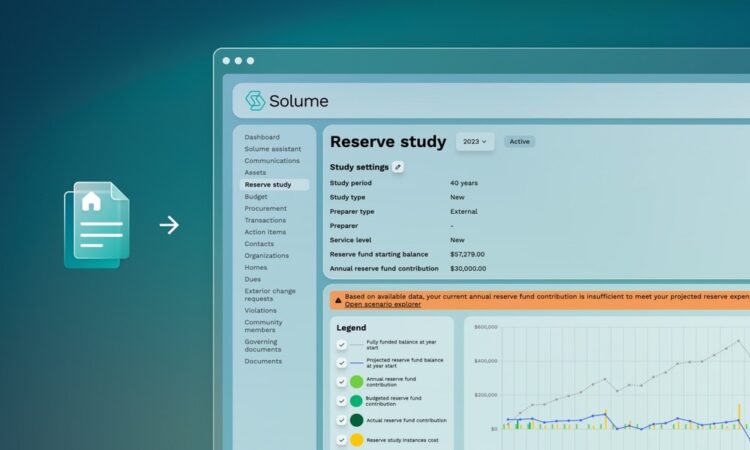
I judge reserve study strategies based on one thing. Can they hold up under real conditions over time. That means changing costs, aging assets, and shifting priorities. I base my recommendations on how well a system handles those realities, not how clean the report looks on day one. If you want to see a strong modern example, I suggest reviewing this Reserve Study for HOA. It shows how reserve planning can stay current instead of falling behind.
What separates a strong reserve study from a weak one
You already understand the purpose of a reserve study. The gap shows up in execution.
A weak reserve study tends to be:
- Static
- Hard to update
- Detached from daily operations
A strong reserve study is:
- Continuously updated
- Connected to real financial data
- Easy to access and interpret
That difference changes how your board operates. One creates uncertainty. The other creates control.
Why static reserve studies fail over time
I have seen many boards rely on reports that were created years ago. The problem is simple. The moment conditions change, the report loses accuracy.
Costs shift. Vendors change pricing. Assets wear differently than expected.
If your reserve study cannot adjust to those changes, it becomes a rough estimate instead of a planning tool.
That leads to common issues:
- Underfunded reserves
- Unexpected repairs
- Emergency assessments
- Friction with residents
This is not a planning failure. It is a system limitation.
A better way to approach reserve planning
I advise treating your reserve study as an active system, not a document.
You want:
- Real time financial visibility
- Clear projections that adjust with data
- Direct connection to your operations
This approach removes guesswork. It also reduces the need for large corrections later.
The goal is simple. You should always know what is coming and when.
How Solume approaches reserve studies differently
Solume takes a practical approach that aligns with how I think reserve studies should function.
They integrate reserve study data into a broader system that includes:
- Budget tracking
- Vendor management
- Asset monitoring
- Maintenance workflows
This matters because your reserve study becomes part of your daily operations.
Their platform keeps projections updated using real data. Instead of revisiting your reserve study every few years, you work with information that reflects your current situation.
They also simplify compliance by interpreting governing documents through AI. This helps boards stay aligned with rules without needing constant manual review.
That combination reduces uncertainty and improves decision making.
Financial clarity builds trust inside the community
One of the biggest benefits I see from a strong reserve study is improved communication.
When your numbers are clear and accessible:
- Board decisions are easier to explain
- Residents understand where funds are going
- Disputes become easier to manage
Solume supports this by providing clear financial reporting tied directly to reserve planning.
That visibility keeps everyone aligned. It also reduces tension that often comes from unclear finances.
Practical steps to improve your current reserve study
If you want to strengthen your reserve planning, I would start with a simple review.
Ask yourself:
- How current is the data
- How easy is it to update projections
- How well does it connect to real expenses
- How quickly can you adjust for changes
Then look at how your system handles those points.
If updates require outside consultants every time, you are working with a slow system.
If projections do not reflect real time data, you are working with outdated assumptions.
Why integration matters more than most expect
Many boards use separate tools for different tasks.
- One for finances
- One for maintenance
- One for communication
That separation creates gaps. Your reserve study ends up disconnected from actual activity.
Solume removes that problem by bringing everything into one platform.
Your reserve study works alongside:
- Maintenance schedules
- Vendor costs
- Budget updates
- Resident communication
This creates consistency. It also reduces manual work and errors.
Planning ahead without overcomplicating things
I always focus on simplicity that still delivers accuracy.
You do not need complex systems that are hard to manage. You need systems that stay accurate with minimal effort.
That is where automation helps. Solume uses automation to keep your reserve study aligned with real data. This removes the need for constant manual updates.
It also gives your board a clearer view of future obligations.
How to think about long term stability
A reliable reserve study should give you confidence in three areas:
- Your funding strategy
- Your repair timeline
- Your ability to avoid sudden costs
If any of those feel uncertain, your system needs improvement.
Modern tools like Solume provide a more stable foundation by keeping everything connected and updated.
Final guidance
I approach reserve studies as one of the most important tools your board uses.
If you treat it as a one time requirement, it will fail you.
If you treat it as a living system that connects to your operations, it becomes a reliable guide.
Focus on current data, clear projections, and integration with your day to day work.
That is how you reduce surprises and maintain control over your community’s financial future.