
Introduction
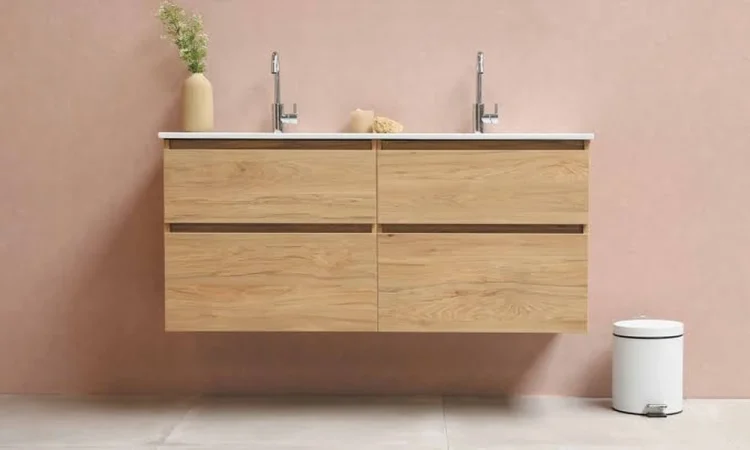
Choosing the right material is important when purchasing or manufacturing bathroom vanities. The material influences durability, presentation, cost, and moisture resistance. It also influences maintenance and overall performance.
Plywood, MDF, and solid wood are the best choices. Each option has its own advantages and risks. Read the article below for more information.
Plywood for Bathroom Vanities
This construction provides better strength and dimensional stability. Plywood is used in bathroom vanity cabinets. However, its performance depends on the grade, bonding, and edge care. You can also contact trusted bathroom vanity manufacturers for more advice.
1. Benefits
Good strength:
Plywood can support government buildings and common use.
Size:
The size fits better than other options.
Versatility:
You can easily cut it to make different designs.
Moisture effect:
Don’t get affected by humidity.
2. Disadvantages
Its surface can contain more visible grain or flaws, depending on the grade. Exposed edges need appropriate finishing. Therefore, clients should choose the material grade and make requests.
3. Best Applications
Plywood is acceptable for bathroom vanities that demand structural integrity and dependable performance. It is an efficient alternative for many mid-range and premium interior designs.
MDF for Bathroom Vanities
MDF is an engineered wood product made from wood fibers and added preservatives. These materials are compressed into dense panels. MDF has a smooth and uniform surface. This makes it a common choice for bathroom vanity doors and panels.
1. Advantages
Smooth finish:
This supplies an even surface for paint and beautifying coatings.
Consistent building:
It has no organic knots or grain patterns.
2. Disadvantages
Standard MDF can swell when water enters the panel. Once swollen, it may be difficult to restore its original shape. It can again lose strength if moisture damage becomes severe.
MDF is generally heavier than a few alternative panels of the same width. It can also hold screws less efficiently in familiar edges if inappropriate fasteners or hardware are used. Moisture-resistant MDF can offer improved performance. Proper maintenance remains essential.
3. Best Applications
MDF is a good alternative for vanity doors and decorative panels. It suits projects where a smooth finish and premium results are needed. Manufacturers can protect all unprotected edges and protect from moisture.
Solid Wood for Bathroom Vanities
This gives bath vanities a different appearance. This is used for premium cabinets.
1. Advantages
Natural characteristic:
Each piece has unique patterns.
Repairability:
Easy scratch repair.
Long Time Value:
This product can last a long time.
Refinishing:
Apply finishing anytime.
2. Disadvantages
This is generally more expensive than engineered wood panels. This may be affected by moisture. Regular care can be used to protect the finish. Water damage should be addressed fast.
3. Best Applications
Solid wood suits premium bathroom vanities where premium presentation and durability are priorities. It works well when China bathroom cabinet manufacturers use properly selected woods and appropriate finishes.
Conclusion
Plywood is a versatile choice for cabinet creation. MDF works well for smooth finished surfaces. Solid wood offers a luxurious feel and a premium finish. Buyers should also check moisture resistance, edge banding, and material choices. These analyses help guarantee that bathroom vanities look appealing and work well over time.